A WTXL ABC 27 Tallahassee News report this week flagged something most people will scroll past: the National Hurricane Center is updating the forecast cone it uses for the 2026 Atlantic hurricane season. The cone itself — that familiar widening funnel drawn over the Gulf and Atlantic — is being revised in how it's calculated and displayed.
This is not a warning that storms are coming. It's a calibration update. But calibration updates matter, because the cone is the single graphic most American coastal families use to decide whether to stay or go.
What the cone actually shows — and what it doesn't
The forecast cone represents the probable track of a storm's center over five days. Historically, roughly two-thirds of storm centers have stayed inside the cone. That sounds reassuring. The problem is that most people interpret it as a damage boundary: if their house is outside the cone, they assume they're safe. That's wrong.
Damaging winds, storm surge, and flooding routinely extend well beyond the cone's edges — sometimes by 100 miles or more in the case of a large storm. A house 50 miles to the right of a cone edge can flood badly while a house at the cone's center escapes serious damage.
The NHC has been working for years to reduce this misinterpretation. The 2026 update appears to be part of that effort. If the revised cone is displayed with clearer probability gradients or paired more prominently with surge and wind-field maps, it could genuinely change how families assess their risk — or it could just look different without changing behavior at all.
The gap isn't the graphic. It's that most households don't have a pre-season plan that accounts for scenarios outside the cone.
What this means for a real family
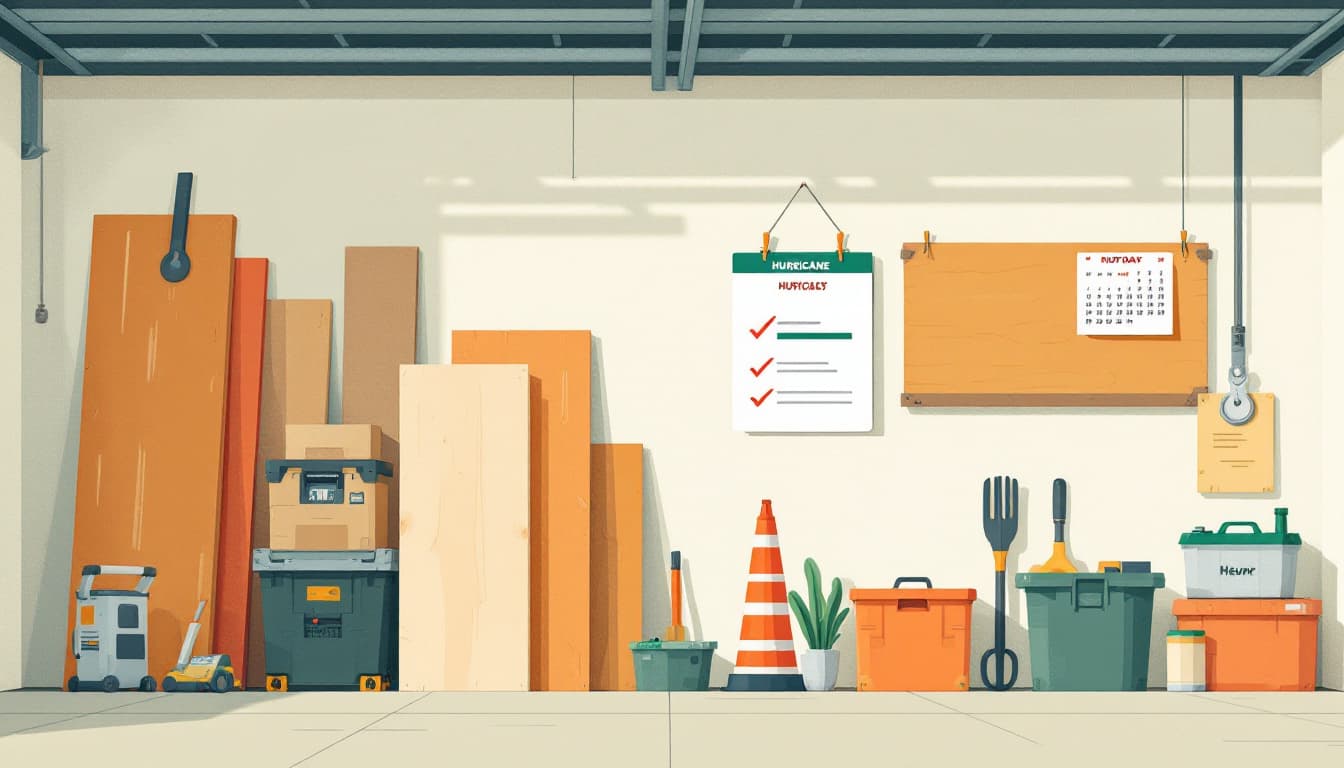
If your emergency planning starts when a storm enters the Gulf, you're already behind. The cone update is a useful reminder that the six weeks before a storm matters as much as the 72 hours during one.
Here's what we'd actually do before the 2026 season gets active:
Pull your address's storm surge zone map now, not in September. FEMA and most state emergency management agencies publish zone maps by address. Surge — not wind — is the leading cause of hurricane deaths. Knowing you're in Zone A or Zone B before a storm is named means you're making a rational decision, not a panicked one. Take ten minutes this weekend.
Write down your trigger: at what storm category or zone threat do you leave? Most families don't make this decision in advance, which means they make it under stress, with bad information, and often too late. A simple written rule — "If our surge zone is under a mandatory evacuation order, we leave" — removes the friction when it matters. Put it on the fridge alongside your out-of-state contact's phone number.
Audit your 72-hour kit for the specific failure points of your area. A coastal Florida household needs different supplies than an inland Georgia household that might see flooding and extended power outages. Flood households need waterproofing for documents and medications. Power-outage households need a realistic plan for refrigerated medications and electric medical equipment. Generic gear lists don't cover this.
Check your insurance coverage before hurricane season, not after. Homeowner's policies in most coastal states exclude flood damage. NFIP flood insurance has a 30-day waiting period before coverage takes effect. If you don't have flood insurance and a named storm forms, it's already too late to buy it. Call your agent this week.
The bigger picture
The NHC updating its forecast tools is a sign that the science of storm communication is genuinely evolving. The agency is trying to close the gap between what meteorologists know and what households understand. That's worth paying attention to.
But no forecast graphic — however well-designed — replaces a household plan. The families who came through recent storm seasons with the least disruption weren't the ones who watched the cone most carefully. They were the ones who had already answered the hard questions before the season started: where to go, when to leave, what to take, and who to call.
The 2026 season starts June 1. That's this week.