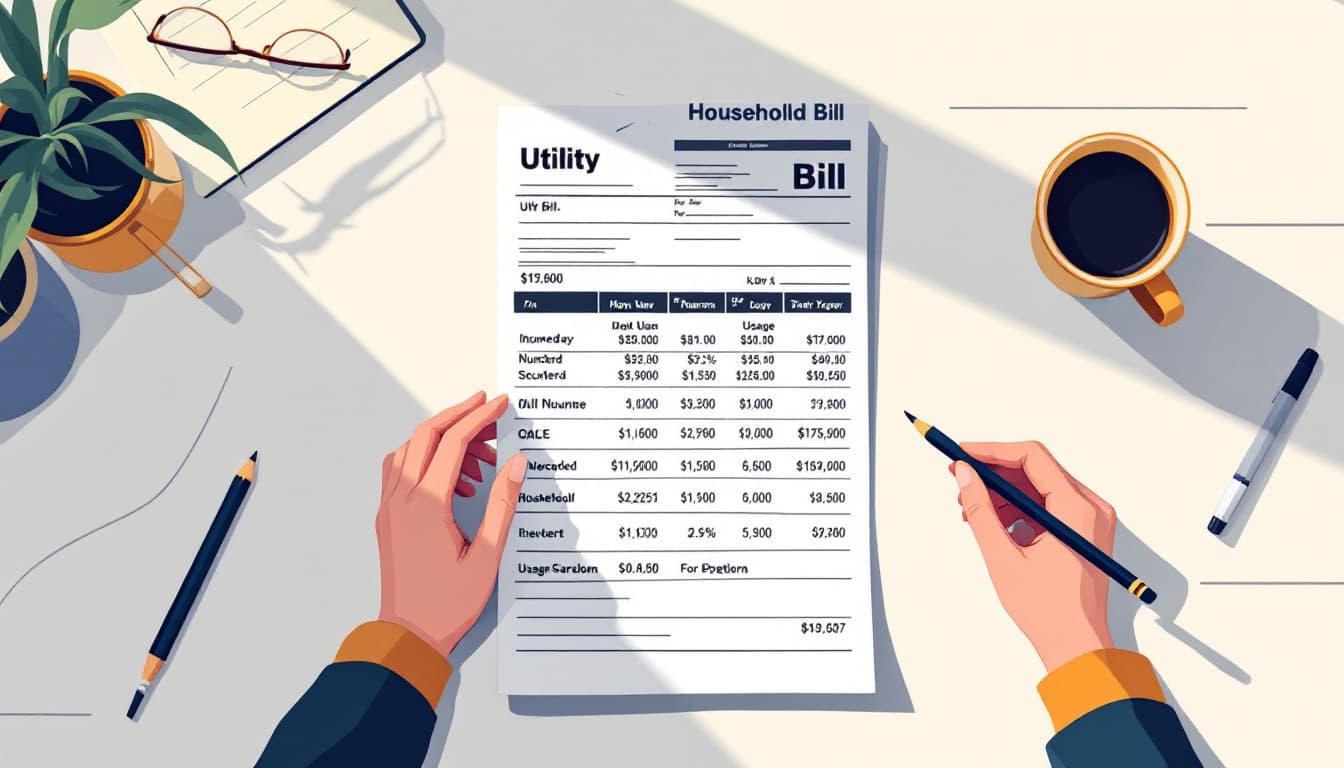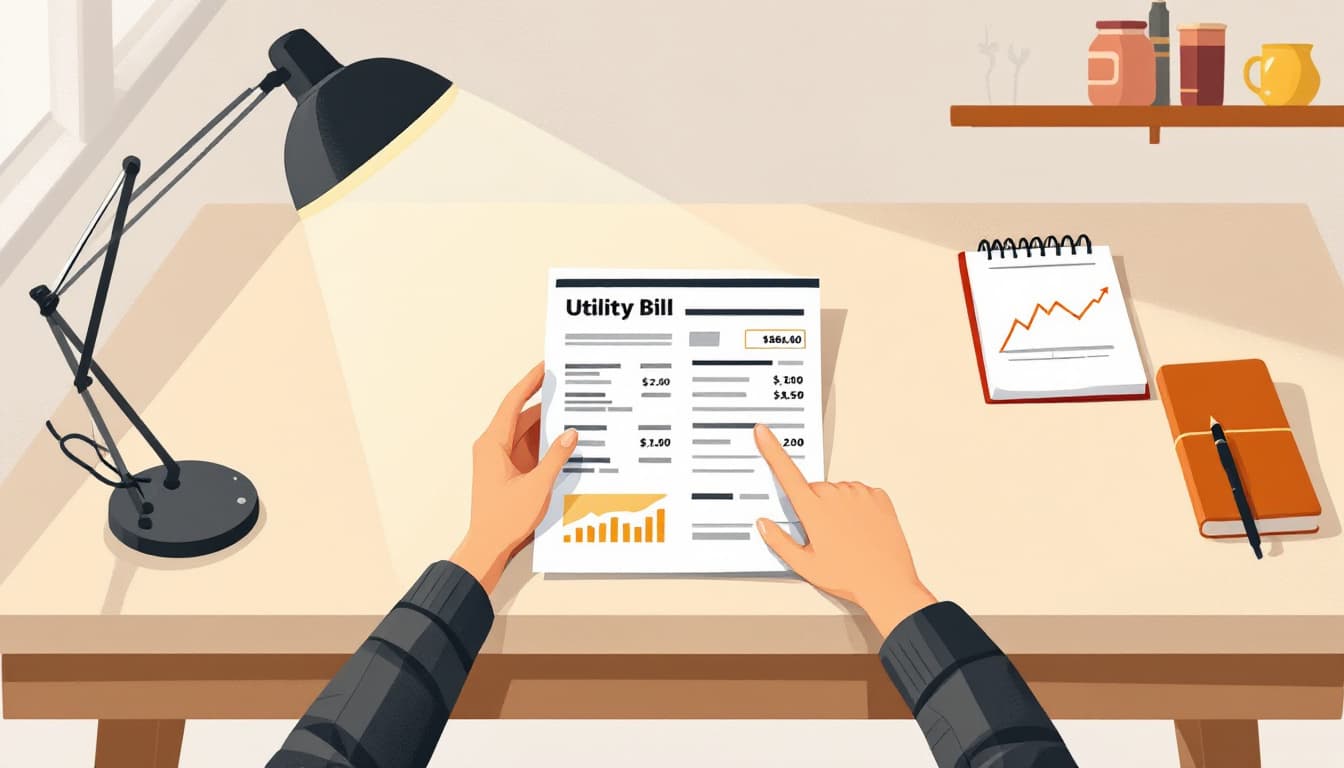
Somewhere in your email or your junk drawer is a utility bill you have never actually read. You have processed it — confirmed the amount, paid it, moved on. But the bill itself, the pages behind the total, might as well be written in a foreign language.
That is a problem. Not because your electric company is hiding anything nefarious, but because that document is one of the most information-dense snapshots of your household's physical vulnerabilities that exists. And almost no one reads it.
What the bill is actually telling you
A standard residential electric bill contains several distinct layers of information. The headline number — your total charge — is the least useful part. Buried beneath it, usually on page two or three, are things like:
Your daily average consumption in kilowatt-hours. This number, tracked over twelve months, tells you more about your home's efficiency (or inefficiency) than any energy audit pitch ever will. A sudden jump in daily kWh with no change in behavior usually means something — an HVAC unit running long cycles, a water heater element failing, a chest freezer seal going soft.
Demand charges, if you have them. Most residential customers don't, but some utilities in areas with grid stress have started introducing time-of-use or peak-demand pricing for households. If yours does, you are being charged differently for power you use at 4 p.m. on a Tuesday in August than power you use at midnight. This is directly relevant to how and when you run high-draw appliances.
Tier or rate schedule. This tells you which pricing tier you're in — and whether you're close to crossing into a higher one. In California, for example, the difference between Tier 1 and Tier 2 pricing has historically been significant per kWh. If you're at the boundary, one additional appliance or one hot week can push your bill meaningfully higher.
Baseline allowance. Many utilities give you a discounted baseline allotment per day. Usage below that threshold is priced lower. Most customers have never confirmed whether they're above or below it.
Why this is harder than it should be
Utility bills are not designed for comprehension. They are designed for billing. The summary page with the big number is visually dominant. The explanatory detail is formatted in the style of a legal document from 1987.
There is also a psychological barrier: most of us have learned that utilities are fixed costs, something to budget for but not to optimize. That framing was roughly correct when rates were flat and stable. It is less correct when rates have been rising, when time-of-use pricing is spreading, and when summer demand peaks are becoming more intense and longer-lasting.
The real compounding effect is this: a household that understands its baseline consumption has a calibration point. When something goes wrong — a freezer quietly failing, an HVAC running inefficiently, a circuit with a slow draw — they notice it in the bill. A household that treats the bill as a number to pay does not notice until the appliance is dead or the repair is expensive.
Under stress — extended heat, a partial power restoration, a generator running on a constrained fuel supply — that calibration becomes genuinely important. Knowing that your house typically draws 28 kWh per day tells you something about how long your backup capacity will last. Not knowing means guessing.
What to do this week
This is a one-hour project, not a lifestyle change.
-
Pull your last twelve months of bills. Your utility's website almost certainly has them in your account history. Download them as PDFs.
-
Find your daily kWh average for each month. Chart it by hand or in a simple spreadsheet. You will see a seasonal curve. Note the peaks.
-
Identify your rate schedule. It is usually a code on the bill (something like "Residential Schedule E"). Look it up on your utility's rate page. Confirm whether you're on flat-rate, tiered, or time-of-use pricing.
-
Calculate your baseline allotment. Compare it to your actual usage. Are you above or below? By how much?
-
Set a high-usage alert. Most utility apps let you set an email or text alert when you cross a daily or monthly threshold. Enable it. It costs nothing and functions as an early-warning system.
That's it. No purchases required. No special tools.
The bigger picture
Preparedness culture spends enormous energy on dramatic skills — fire-starting, water purification, defensive planning. These have their place. But the un-dramatic skills, the ones that look like ordinary household competence, are the ones that actually reduce a family's exposure to disruption.
Understanding your utility bill is in the same category as knowing your insurance deductibles, understanding your water shutoff valve, or being able to read a flood map. Each one takes an hour to learn. Together they add up to a household that is harder to surprise.
The goal is not to become an energy analyst. The goal is to know your home well enough that you notice when something is off — before it becomes expensive, or worse, before it matters in a moment when you have fewer options.