On a typical August afternoon in central Louisiana, the air is already near the limit of what feels tolerable — heat index above 100°F, humidity that turns a five-minute walk into a shirt-soaking event. Add wildfire smoke drifting down from fires in the western U.S. or Canada, and the outdoor air becomes something your lungs are working against, not with.
A report this week from KALB News Channel 5 raised a direct question Louisiana residents have been asking: is wildfire smoke affecting air quality here? The answer, based on recent AirNow monitoring data for the region, is that smoke plumes do periodically push into Louisiana, particularly during peak western fire season in July and August. The state's geography — flat, with prevailing winds that can carry upper-atmospheric smoke thousands of miles — makes it a receptor for distant fire events that most Louisianans would never connect to the haze sitting over Baton Rouge or Alexandria.
What's actually different about smoke exposure in Louisiana
The standard wildfire smoke advice — stay indoors, run an air purifier, wear an N95 outside — was written with drier climates in mind. Louisiana complicates it in three ways.
First, most Louisiana households run central air conditioning, which recirculates indoor air but does not filter it to the standard needed to catch fine particulate matter (PM2.5), the fraction of wildfire smoke that causes the most harm. A standard 1-inch fiberglass MERV-4 filter, which is what many builders install and what many renters inherit, captures almost none of it.
Second, the heat makes the "just stay inside" recommendation more complicated for households without reliable, functional AC — a real constraint in older housing stock in parishes like Rapides, Natchitoches, and Calcasieu. People open windows to cope with heat. Smoke enters.
Third, wildfire smoke events in Louisiana often look like ordinary haze or humidity. There's no dramatic orange sky, no ash on cars. The air quality index on AirNow may tick into the orange or red range while residents assume it's just a muggy day. That invisibility is the actual risk.
What we'd actually do
Check AirNow daily during August and September, not just when smoke looks obvious. Go to airnow.gov, enter your Louisiana zip code, and bookmark it. The site shows real-time AQI with color coding. Orange (101–150) means sensitive groups — kids, elderly, anyone with asthma — should limit time outside. Red (151–200) means everyone should. This takes 20 seconds and costs nothing.
Replace your HVAC filter with a MERV-13 if your system supports it. Call your HVAC company or check your unit's manual first — some older systems can't handle the restricted airflow of a high-MERV filter and will strain the blower motor. If your system supports MERV-13, a filter change runs $15–$30 and meaningfully improves your home's ability to catch PM2.5 during smoke events. Change it after any multi-day smoke episode, not just on a calendar schedule.
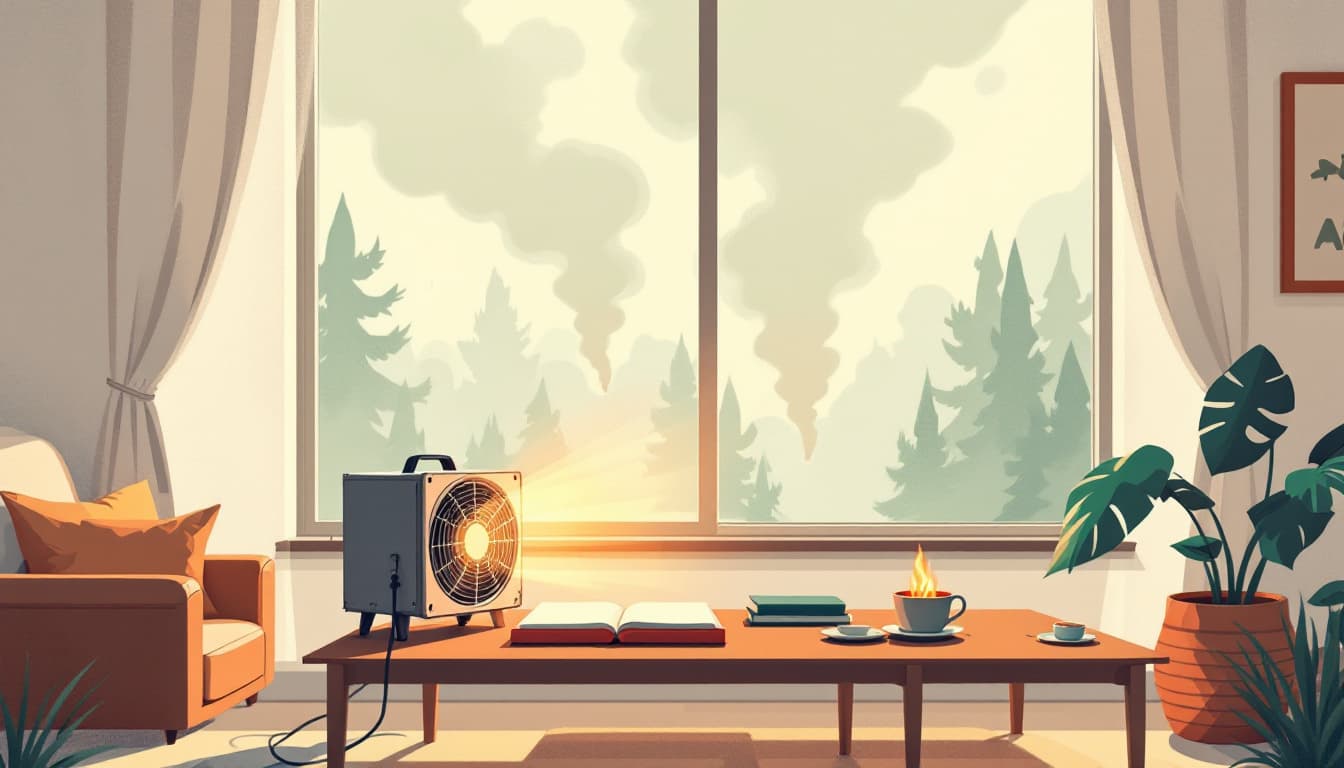
Build a box-fan air purifier for rooms without central air. A 20-inch box fan with a MERV-13 or better furnace filter taped to the intake side costs under $40 total and can meaningfully reduce PM2.5 in a single room. This is the Corsi-Rosenthal box design, documented by researchers and widely validated — not a prepper myth. It's especially useful for households with window units that can't be upgraded.
Stock N95 masks for outdoor tasks you can't defer. If you need to mow, walk to your car repeatedly, or work outside on a smoke day, an N95 (not a cloth or surgical mask) is the only consumer option that filters PM2.5. Keep a box in the house. They cost roughly $1–$2 each bought in multi-packs and last for multiple uses if not soiled.
Talk to household members with asthma or heart conditions now, not during an event. Louisiana has elevated rates of both conditions. Know what their doctors have said about air quality thresholds, have rescue inhalers accessible, and identify in advance which rooms in your home have the best filtration or can be sealed off as a cleaner refuge.
The bigger picture
Wildfire smoke reaching Louisiana is not a catastrophe signal — it's a supply chain of atmospheric chemistry that has been expanding for years as western fire seasons grow longer. Louisiana households are not helpless in front of it. The tools that work are cheap, well-understood, and available at any hardware store. The gap is awareness, not gear.
The goal here is not to panic-buy air purifiers or seal your house in plastic sheeting. It's to spend twenty minutes this week understanding your home's actual filtration baseline, spend perhaps $30 improving it if needed, and check AirNow on days when the sky looks a little off. That's the full scope of a sensible response.
Durability over drama — that's the frame. Louisiana weather already demands it.