A few inches of rain feel like relief. The drought monitor doesn't care about your feelings.
A report this week from the Cherokee Scout notes that drought conditions across western North Carolina are persisting despite recent precipitation. That's the part casual weather-watching misses: a drought isn't broken by one wet week. Soils that have been moisture-deficient for months act like a dry sponge held under a faucet for three seconds — they absorb what they can, runoff does the rest, and the underlying deficit remains. The U.S. Drought Monitor, updated weekly by a partnership of NOAA, USDA, and the National Drought Mitigation Center, has been the most consistent public signal of where western NC stands. As of the most recent releases, significant portions of the Mountain and Foothills regions remain in moderate-to-severe drought categories.
What's actually happening
The confusion is understandable. Rain fell. Creeks ran. Gardens got a drink. But there are two separate problems layered on top of each other right now.
The first is soil moisture deficit. Months of below-normal precipitation mean the ground itself needs sustained rain over weeks, not a single event, to recover. The second is reservoir and groundwater levels. Lakes and aquifers recharge slowly, and many municipal and private well systems in western NC draw from aquifers that lag the surface by weeks or months. The Catawba River basin, which supplies water to a large portion of the western Piedmont and eastern Mountain communities, is sensitive to prolonged dry periods across the upper watershed — right where Cherokee County and its neighbors sit.
For households on private wells — a large share of rural western NC — drought conditions translate directly into reduced well yield and, in the worst cases, wells that go dry before summer ends. Municipal systems generally have more buffer, but they can and do impose outdoor watering restrictions when reservoir levels drop. The state's Division of Water Resources publishes drought status reports that are worth bookmarking.
Summer is coming. If the soil deficit doesn't close before peak evapotranspiration season, this situation gets harder to reverse until fall.
What we'd actually do
Audit your actual water use this week, before any restrictions arrive. Pull your last two utility bills or, if you're on a well, estimate your daily household draw. Most North Carolina households use between 50 and 80 gallons per person per day. Knowing your baseline lets you cut strategically rather than randomly if voluntary or mandatory restrictions come.
If you're on a private well, get it tested and observe it. Schedule a water test through the NC State Laboratory of Public Health — they offer testing at low cost for well owners. Beyond chemistry, watch for any change in flow rate, air spitting from the tap, or sediment, which are early signs of a dropping water table. If your well has a pitless adapter or access cap, note the static water level if you have a way to measure it. This is the kind of monitoring that gives you weeks of warning instead of days.
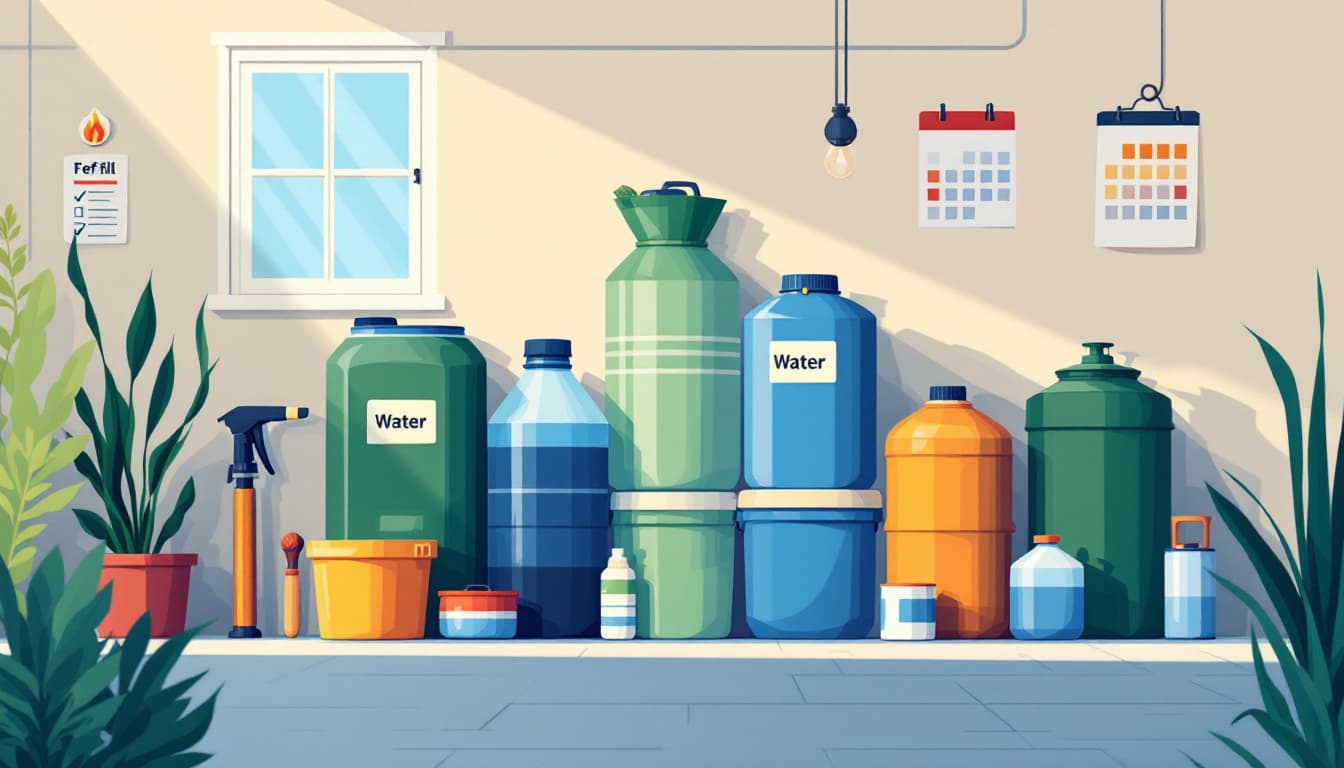
Store a modest amount of water now, not during a crisis. We're not talking about a bunker supply. FEMA's baseline guidance is one gallon per person per day for three days — a reasonable floor. A more functional target for a household facing a potential well disruption is two weeks of drinking and cooking water, stored in food-grade containers. For a family of four, that's roughly 56 gallons. A combination of commercially filled jugs and clean, refilled containers kept in a cool interior space is achievable for under $50. Rotate every six months.
Check your outdoor water habits. Lawn irrigation is the fastest way to drain a well or rack up a water bill when restrictions hit. If you irrigate, shift to early-morning watering to cut evaporation loss by roughly 30 percent compared to midday. Better, inventory which outdoor plants actually need water to survive versus which ones are just nice to have.
Know your county's drought response triggers. Haywood, Cherokee, Macon, Jackson, and surrounding mountain counties all have water management plans that kick in at specific drought monitor thresholds. Look up your county water utility's drought contingency plan — most post them online or will send them on request. Knowing the trigger levels tells you when voluntary conservation becomes mandatory, so you can act ahead of your neighbors rather than alongside them.
Drought in western North Carolina is not a catastrophe in waiting. It's a slow, measurable process that rewards people who pay attention earlier than everyone else. The goal isn't to panic-buy water filtration systems. It's to understand your household's specific dependency — well or municipal, river basin or aquifer — and build enough buffer that a dry summer is an inconvenience rather than a crisis. That's durable. That's the point.