A report this week from NPR for Oregonians notes that drought is spreading across the state and that officials are pushing conservation tips. What the coverage doesn't cover is what happens inside your house when that drought bites harder — when your municipality moves from voluntary to mandatory restrictions, when a rural well drops, or when a wildfire smoke event forces you to run water-dependent air filtration around the clock while reservoir levels are already low.
That gap between official guidance and household reality is worth closing now, before late June.
What's actually changing
Oregon's drought conditions tend to start in the eastern and southern parts of the state — the Klamath Basin, the high desert east of the Cascades — but in dry years they push west. The Willamette Valley's mountain snowpack feeds municipal systems from Eugene to Portland through the summer. When snowpack runs below average, utilities draw down storage earlier and have less buffer if August stays hot and dry. That's not a prediction; it's the mechanism.
Oregon Water Resources Department tracks drought declarations by basin. As of late May 2026, several basins are already under advisory or drought watch status. That's early. Families on private wells in rural Deschutes, Harney, Lake, or Jackson counties face a different and faster risk than Portland metro households, but both groups have the same problem: they haven't inventoried their actual water exposure.
Most households have no idea how much water they use in 24 hours, have no stored water, and have never tested whether their municipal utility has issued a drought contingency plan. Those three gaps are fixable this weekend.
What we'd actually do
Find out where your water actually comes from. Call or look up your municipal utility's website and find their water source document. Portland Water Bureau draws from Bull Run watershed and the Columbia South Shore well field. Medford Water Commission relies heavily on Rogue River flows. Knowing your source tells you which drought indicators to watch. Oregon DEQ and Oregon Water Resources Department both publish basin-level conditions online at no cost.
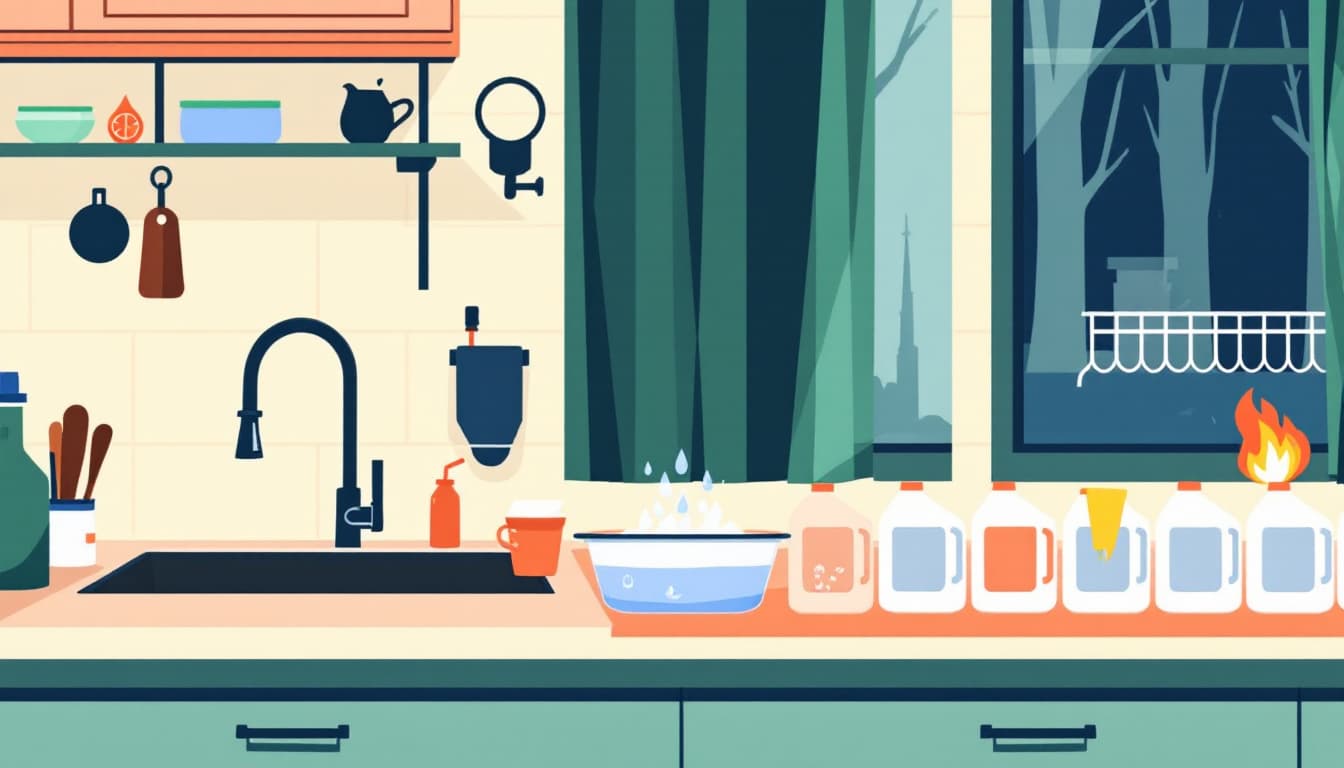
Store three gallons per person per day for a minimum of two weeks. This is the number FEMA publishes and it's the floor, not the ceiling. For a family of four, that's 168 gallons. You don't need a specialty tank to start. Food-grade 5-gallon jugs from a hardware store cost under $10 each and stack in a garage. Fill them from the tap, add 8 drops of unscented liquid chlorine bleach per gallon if storing longer than six months, and rotate annually. This is not a gear purchase — it's a water purchase.
Check your home's water footprint for the obvious waste points. A running toilet loses roughly 200 gallons a day. A dripping outdoor faucet loses 20. Oregon utilities under drought conditions typically restrict outdoor irrigation first — lawns, gardens, washing vehicles. If you have an older toilet (pre-2000 installation), it likely flushes at 3.5 to 7 gallons per flush, versus the current federal standard of 1.28. A $5 fill valve replacement or a weighted displacement bag in the tank cuts flush volume immediately.
If you're on a private well, get a recent water level reading. Oregon Well Report Viewer, a free state tool, shows historical well logs for your area. If neighbors' wells have been dropping or your pump is cycling harder, that's a signal to call a licensed well driller for a current static water level measurement. Waiting until August when every driller in Central Oregon is booked out three weeks is the wrong time to learn your well is at risk.
Know your utility's drought stage triggers. Most Oregon municipal utilities have a multi-stage drought contingency plan. Stage 1 is typically voluntary conservation. Stage 2 introduces mandatory restrictions — often banning lawn irrigation on certain days. Stage 3 can mean no outdoor use at all and pressure reductions. These plans are public documents. Reading yours takes 15 minutes and tells you exactly what the rules will be before officials announce them.
The bigger picture
Oregon has always had a split water personality: wet west, dry east, and a snowpack-dependent summer that can shift quickly. The families who handle drought years best aren't the ones with the largest water tanks. They're the ones who already understood their system, knew their numbers, and made small fixes before the restrictions hit.
Durable households are not households that never face scarcity. They're households that aren't surprised by it.