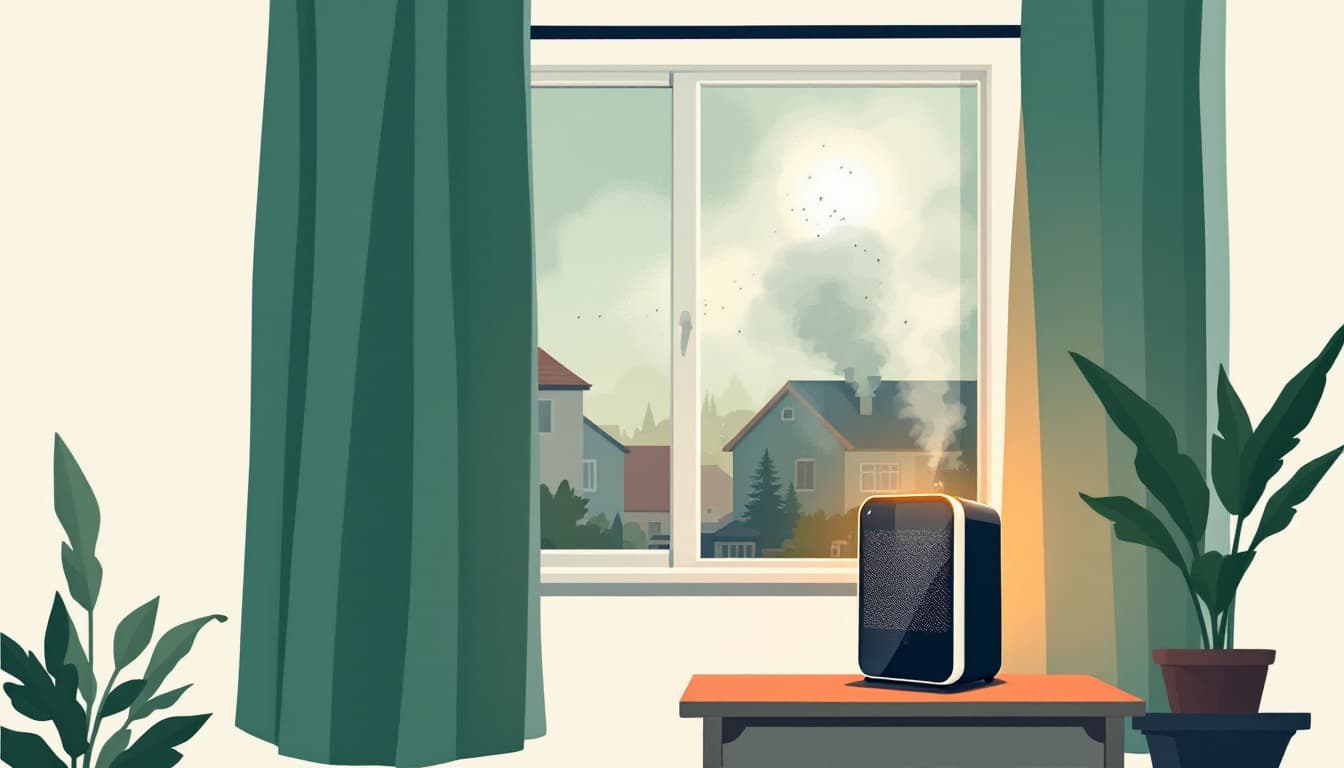
A report this week from The Independent Record tracked wildfire smoke air quality alerts pushing through Missoula County, Montana — and anyone who has watched summer smoke maps knows the plume doesn't respect state lines. By the time a fire complex in eastern Oregon or northern California is generating those alerts in Montana, the Willamette Valley, Bend, and the gorge communities are already breathing it.
Oregon's Department of Environmental Quality publishes daily AQI readings by county at oregon.gov/deq. In mid-August, it's not unusual to see the Eugene, Medford, or Portland metro stations tick into the orange (101–150) or red (151–200) range for several consecutive days. At those levels, fine particulate matter — PM2.5 — is the specific hazard. It's not the visible haze that hurts you; it's the particles small enough to bypass your upper respiratory system entirely.
What's actually changing this season
Smoke exposure used to be a two-week annoyance in late August. Recent fire seasons have stretched that window. Oregon households in the southern Cascades and Rogue Valley have seen smoke-affected days starting in late June and running into October. The Columbia River Gorge funnels smoke from both eastern Oregon fires and Washington fires westward into the Portland metro.
The other shift is source complexity. A household checking AQI on a given Tuesday might be breathing smoke from three separate fire complexes in two states. Oregon DEQ's AirNow monitoring network reports the combined result, but attribution is harder — which matters if you're trying to predict when it clears.
One thing that hasn't changed: most Oregon homes are not built to keep smoke out. A house with a gas furnace and a standard 1-inch fiberglass filter will cycle outdoor air indoors continuously. That filter catches dust, not PM2.5.
What we'd actually do
Upgrade your furnace filter before the next red day, not during it. A MERV-13 filter fits most forced-air systems and captures a meaningful fraction of fine particulate matter — MERV-8 or lower, the standard cheap filter, does not. Check your system's manual for the maximum MERV rating it supports; some older systems restrict airflow with high-MERV filters and can overheat. Replacing a filter costs between $15 and $35. Doing it now means you're not searching for one at Home Depot on the first 150-AQI day of the season, when stock runs thin.
Build a box fan filter for a room where you sleep or spend most of your time. This is a $30 fix that works. Tape a MERV-13 or higher furnace filter to the intake side of a 20-inch box fan. Run it on medium in the room with the door closed. Studies from the University of Michigan and others have documented meaningful PM2.5 reductions in test rooms using this setup. It's not a substitute for a dedicated HEPA air purifier, but it performs well for the cost. Oregon households in Medford and Ashland — where smoke seasons run longest — should keep the materials on hand year-round.
Know your county's specific AQI triggers. Oregon DEQ and the Oregon Health Authority use an action threshold of AQI 101 (orange) for sensitive groups and 151 (red) for the general population. Set up AirNow.gov text alerts for your county now. The alert takes about two minutes to configure and means you're not checking manually every morning.
Tape your attic hatch if you're in a smoke event that runs more than 48 hours. Attic bypasses are one of the largest uncontrolled air infiltration points in older Oregon homes. During a prolonged smoke event, a strip of painter's tape around the attic hatch perimeter meaningfully reduces the particulate pathway into your living space. It's reversible and costs nothing if you already own tape.
Have N95s on hand for any outdoor exposure above AQI 150. Oregon's DEQ and the CDC both recommend N95 respirators (not cloth masks, not surgical masks) for outdoor activity during red-day events. A box of ten N95s runs $15–25 and keeps for years if stored in a cool, dry place. The time to buy them is not when the smoke arrives.
The bigger picture
Wildfire smoke is the environmental hazard Oregon households are most statistically likely to face in any given summer — more likely than a major earthquake this week, more likely than an extended power outage. It's also one of the most underprepared-for hazards because the exposure is cumulative and invisible rather than dramatic and obvious.
Durability here looks like a household that barely notices a three-day orange-air event because the filters are already in, the fan is already built, and the alerts are already set. None of that requires a bunker or a crisis mindset. It requires about two hours and less than $75, done once.