A WJCL report this week describes a prolonged heat wave pressing down on Southeast Georgia and the South Carolina Lowcountry, with no meaningful relief in the short-term forecast. The language is familiar — "dangerous heat index values," "stay hydrated," "check on the elderly." Good advice. Also the same advice issued during every August heat event for the past decade, and it skips the part where most household heat emergencies actually start: not outdoors, but inside, when the air conditioner quits.
What's actually changing
Regional summer heat in the Southeast is not new. What has shifted is the duration and overnight character of these events. When nighttime low temperatures stop dropping below the low 80s, homes that managed fine during previous heat waves can no longer passively recover overnight. Thermal mass that cooled down at 2 a.m. and bought you a comfortable morning no longer gets that chance. The buffer disappears. A house that felt manageable during a three-day spike becomes genuinely dangerous during a nine-day one.
Grid load follows the same logic. Sustained events pull more cumulative demand than sharp spikes, which strains distribution equipment — transformers in particular — that was sized for the load patterns of cooler decades. Utility outage data from recent summers shows transformer failures clustering on days four through seven of prolonged heat, not day one. That's the window when demand is highest and equipment is most fatigued.
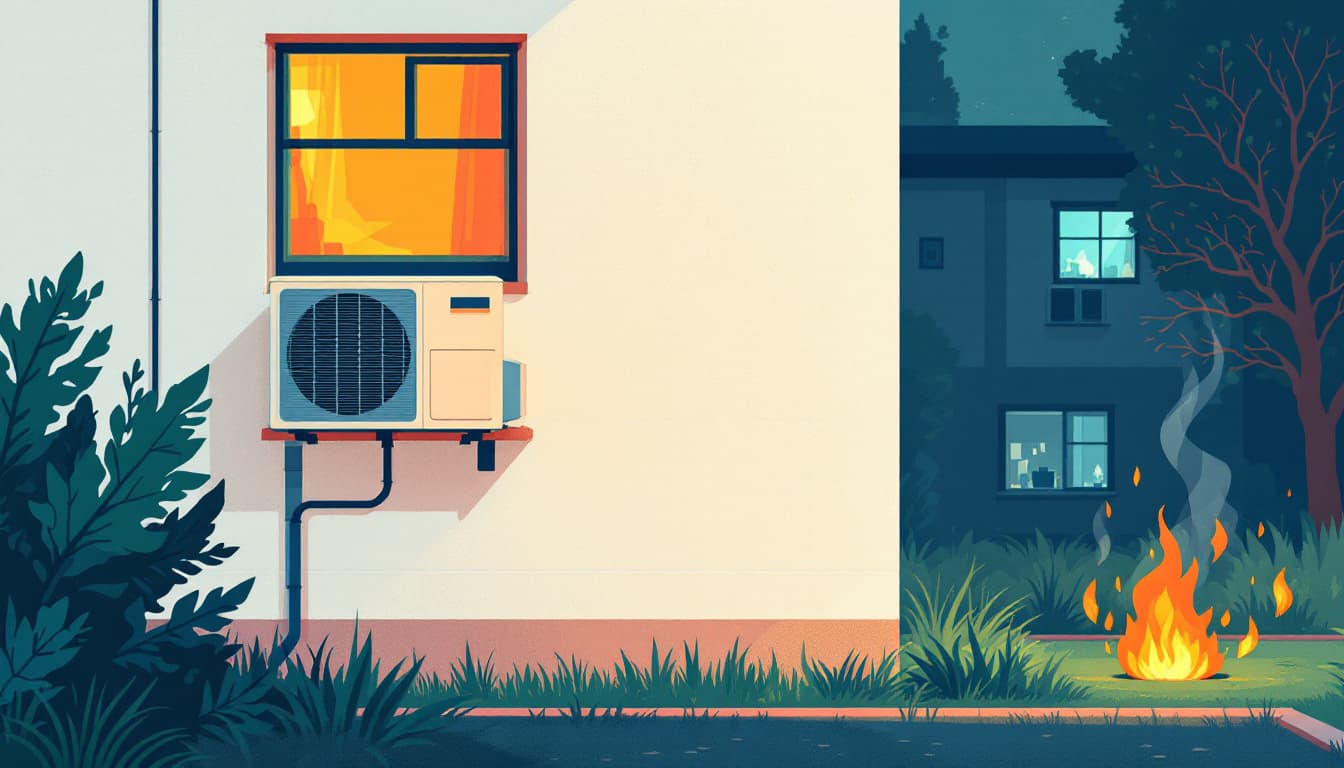
Your air conditioning unit faces a parallel problem. HVAC systems rated for 95°F ambient temperatures lose efficiency as outdoor temps push past that threshold. When the air the compressor is dumping heat into is already 100°F-plus, the system runs longer cycles, pulls more amperage, and is more likely to trip a breaker or fail a capacitor. Capacitors are the single most common cause of sudden AC failure in summer, and they almost always go on the hottest days of the year — when HVAC technicians are already booked three days out.
What we'd actually do
Get a window or portable AC unit before you need it as a backup. A single 8,000-12,000 BTU window unit can hold one room — a bedroom — at a survivable temperature even if your central system fails. During a heat emergency that's not luxury redundancy, it's the difference between sheltering in place and evacuating. Stock a unit before the event, not during it; retailers in the Southeast sell out within hours of a heat advisory.
Know your capacitor. A central AC unit that hums but doesn't cool is almost always a failed run capacitor. The part costs $15-40 at HVAC supply houses (which are open to the public in most states). A YouTube search for your specific air handler model will show you whether this is a 20-minute DIY fix. This isn't a recommendation to do your own HVAC work — it's a recommendation to know whether you can, so you're not waiting four days for a technician when the answer was a $25 part. At minimum, knowing the symptom means you can describe it accurately when you call for service.
Map a cool refuge within ten miles. Libraries, movie theaters, large grocery stores, and most community centers serve as public cooling centers during declared heat emergencies — often without advertising it loudly. Know which one is closest, know its hours, and know whether it's reachable without a working car. This is not a last resort. Using it proactively on the hottest afternoon keeps your household's core temperature down and extends how long your own cooling can carry you the rest of the day.
Check your panel and your breakers before the heat arrives. A central AC unit drawing at peak load on a hot afternoon is often the appliance that reveals an already-weak breaker or an undersized circuit. If your AC trips its breaker more than once in a summer, that breaker needs to be tested and possibly replaced before the next event — not during it. An electrician visit costs $100-200 and takes under an hour for a panel inspection.
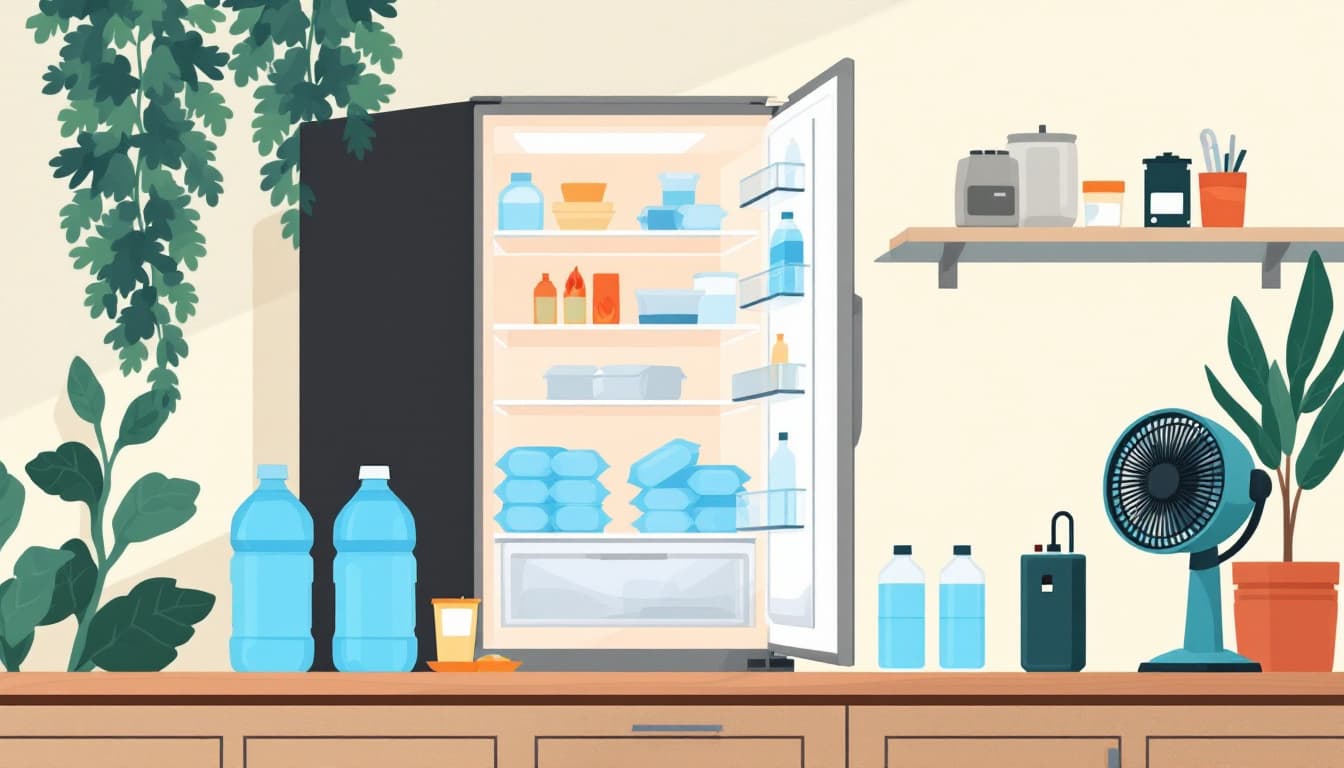
Store four gallons of water per person in your coolest interior room. Not because you'll run out of tap water during a heat wave, but because tap water in the South runs warm in August. Cold water stored in a dark interior closet stays usable for making ice or drinking without the faint-nausea problem of 85°F tap water. This costs nothing if you reuse clean milk jugs and rotate them monthly.
The bigger picture
Heat waves are the deadliest weather event in the United States by annual fatality count — not hurricanes, not tornadoes. They kill quietly, at home, most often when cooling fails and no one notices quickly enough. The Southeast's August 2026 event is one chapter in a pattern of longer and more intense summer heat that regional infrastructure was not designed to absorb without strain.
The goal of preparing for this is not to build a bunker against climate change. It's to close the gap between "the system worked fine" and "the system failed at 4 p.m. on a Tuesday and we had a plan." That gap is smaller than most families think, and the cost of closing it is lower than the cost of a hotel room during an emergency evacuation.