A startup raising money to help retailers see their own supply chains more clearly is not a feel-good tech story. It's a tell. When outside vendors still need to sell "visibility" as a service to major grocery and retail chains in 2026, it means the underlying system is still fragile enough that large companies can't track their own inventory reliably. A report this month from Retail Brew profiled exactly this kind of company. The household-level implication is straightforward: the gaps your family notices on shelves are not accidents, and they are not fully solved.
What's actually changing
The supply chain disruptions that became visible during 2020–2021 exposed a structural problem that predates any single crisis. Large retailers relied on just-in-time inventory — lean stock, fast turnover, no buffer — because carrying extra inventory costs money. That worked until it didn't.
Since then, some retailers have added modest safety stock and diversified sourcing. But recent BLS producer price data still shows elevated volatility in food commodity inputs, and ongoing freight route disruptions — particularly in container shipping lanes — keep resupply timelines unpredictable. The startup profiled by Retail Brew is filling a gap that major retailers haven't closed internally. That gap runs straight to your grocery aisle.
For a family, this plays out in three concrete ways. First, specific SKUs — a particular brand or size of a product — go out of stock without warning and don't return for weeks. Second, when a supplier substitutes a product due to ingredient shortages, the price rarely falls back to the original after the shortage clears. Third, the categories most vulnerable to these gaps tend to be the ones families depend on most: shelf-stable proteins, infant formula, over-the-counter medications, and single-source specialty items.
None of this is catastrophic. It is, however, a persistent low-grade tax on households that don't maintain any buffer inventory at home.
What we'd actually do
Shift from brand loyalty to category fluency. Pick the two or three categories where your family is most price- or brand-specific, and deliberately practice substitution now, while you have time to calibrate. If your kids will only eat one brand of pasta, that's a supply chain vulnerability. Train the flexibility before the shelf is empty.
Most families discover their substitution limits only under stress. Running a quiet experiment — trying the store brand, the different size, the alternate protein — while supply is normal costs almost nothing and removes a decision point during a shortage.
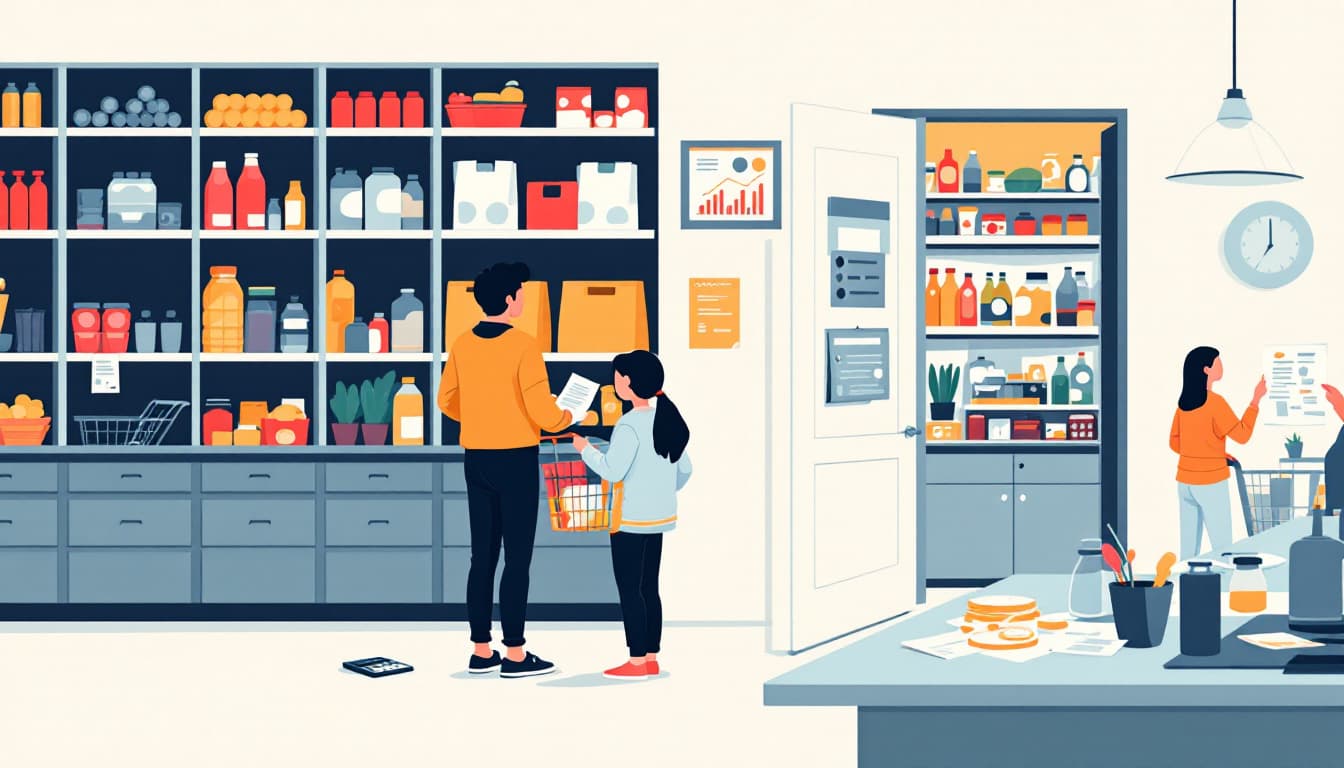
Build a 30-day pantry in the categories that have gapped before. Not a bunker. Not a year of freeze-dried food. A working pantry of items your household actually consumes, rotated through regular use. Canned beans, tuna, pasta, cooking oil, and whatever shelf-stable staples your family eats weekly.
Thirty days of buffer costs roughly $150–$250 for a family of four if built gradually over six to eight weeks of normal shopping. The goal is to stop being a same-week buyer in a category that's experiencing supplier disruption.
Track two or three high-dependency items as price anchors. Pick items you buy every month — a specific cooking oil, your standard canned tomatoes, your household's preferred OTC pain reliever — and note the price each time. You don't need an app. A note on your phone is enough.
This matters because substitution inflation (a different brand at a higher price filling a shelf gap) is nearly invisible unless you have a baseline. Families who track anchor prices catch real cost increases 30 to 60 days before they show up in headline CPI numbers.
Know your store's restock schedule for key categories. Most grocery stores restock fresh and refrigerated items on predictable weekly patterns. Many shelf-stable categories follow similar rhythms. Ask a stocker. This takes three minutes and means you're shopping closer to restock days when supply is most reliable.
The bigger picture
The startup profiled by Retail Brew isn't selling a solution to supply chain fragility. It's selling adaptation to it. That's an honest acknowledgment of where the system actually is. Retailers are learning to navigate chaos, not eliminate it.
Your household can do the same thing, at your own scale, for free. A working pantry, flexible substitution habits, and a few price anchors give you the same buffer that the startup is selling to retailers for far more money. The goal isn't to prepare for collapse. It's to stop being the last node in a fragile chain with no slack of your own.
Durability is cheaper than you think, and it starts with next week's grocery run.