A report this week from WBIR noted that the Tennessee Wildlife Resources Agency is urging boaters to slow down and watch for exposed hazards as drought conditions pull water levels down across East Tennessee's major lakes. The agency's concern is practical and immediate: submerged rocks and stumps that were safely below the waterline last season are now hull-level threats.
That's a legitimate boating warning. It's also a readable signal about something broader.
What's actually changing
Drought in East Tennessee is not rare, but visible lake drawdown by mid-May — before summer heat has even peaked — is worth paying attention to. The Tennessee Valley Authority manages most of the large reservoir system in the region, and TVA routinely adjusts lake levels for flood control, power generation, and recreation. But drought-driven drops are different from managed drawdowns. They reflect a deficit in the watershed itself: less snowmelt, less spring rain, less recharge feeding the rivers that fill Norris, Cherokee, Watts Bar, and the others.
For households, that distinction matters in a few ways.
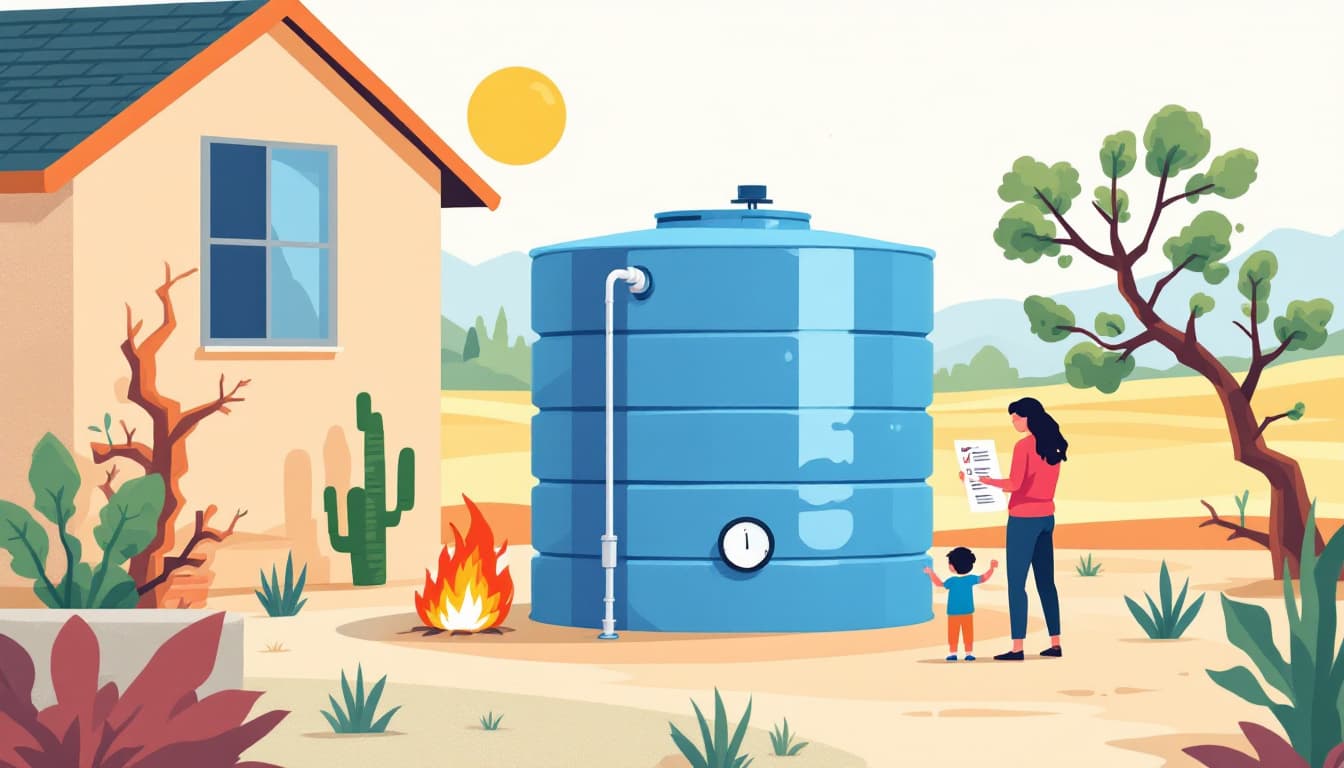
Municipal water systems that draw from reservoir sources can face pressure during extended drought. Rural households on private wells — common across the Ridge and Valley geography of East Tennessee — are more directly exposed. A well that performed fine last year can begin to slow or fail when the water table drops after months of below-normal precipitation. Shallow dug wells are most vulnerable; drilled wells are more resilient but not immune.
There's also a cascading effect that rarely gets discussed in boating-safety coverage: drought stresses gardens, raises utility costs as people irrigate more, and can push wildfire risk higher in the drier months ahead. None of this is catastrophic on a single-summer timeline. Strung together, it shapes household planning.
TVA's public lake level data is updated regularly on their website and is worth bookmarking if you live near a reservoir. The U.S. Drought Monitor, updated every Thursday, shows current drought classification by county — as of this writing, portions of East Tennessee are under abnormally dry or moderate drought designation.
What we'd actually do
Check your water source and know its limitations. If your home draws from a municipal system, look up which reservoir or river it sources from and whether your utility has issued any conservation notices. If you're on a well, locate your well log if you have one — it will tell you the well depth and the static water level at time of drilling. That baseline tells you how much margin you have.
A well log from when the well was drilled is the clearest record of how deep your water source is and how far the water table can drop before you have a problem. County health departments in Tennessee often have well records on file if you've lost yours. Knowing this takes twenty minutes and costs nothing.
Start water conservation habits before you're forced to. Fix any dripping faucets or running toilets now. A slow toilet leak can waste thousands of gallons a month. This isn't dramatic drought-prep — it's the same household efficiency advice that applies year-round, and it creates margin if restrictions tighten later.
Store a modest rotating supply of drinking water. Seven gallons per person covers about a week at minimum use. This isn't a bunker-stocking exercise; it's the same logic as keeping a spare tire. Store-bought water in sealed containers, rotated every year, handles short-term disruptions from main breaks or boil-water advisories, which become more likely when systems are stressed.
Check your garden and lawn watering plan. If you're putting in a summer garden — sensible in Tennessee's long growing season — consider drought-tolerant varieties and drip irrigation over overhead sprinklers. Drip irrigation uses roughly half the water of sprinklers for comparable results. This matters both for your utility bill and for not accelerating drawdown pressure on the local system.
The bigger picture
Tennessee is not in crisis. The lakes are lower than usual for May, boaters need to pay attention, and some wells in drier parts of East Tennessee will bear watching. That's where the situation actually is.
The useful framing isn't "prepare for collapse." It's "remove unnecessary fragility." A household that knows its water source, has a week of stored water, and fixes its leaking toilet is genuinely more durable — and it got there through a few normal Saturday errands, not a panic purchase. Drought conditions fluctuate. Sound household water habits don't have to.