The Hill Country is dry. The Panhandle is drier. And a report this week from CPG Click Petróleo e Gás flagged something that should get Texas households paying attention: the federal government is committing $1 billion toward a Gulf of Mexico desalination facility capable of producing 50 million gallons of potable water per day — while multiple Texas reservoirs are reportedly operating below 30% of capacity.
That's not a future problem dressed up as a headline. Those reservoir numbers reflect conditions families across Central and West Texas have been managing around for months.
What's actually changing
The desalination announcement signals that federal planners now consider large-scale seawater treatment a serious part of Texas's long-term water equation, not a fringe option. That's a meaningful shift. For most of the past century, Texas water policy leaned on surface reservoirs, aquifer draws, and interbasin transfers. Desalination was treated as a last resort because of its energy cost and capital intensity.
A 50-million-gallon-per-day facility is genuinely large. For context, a city of roughly 150,000 people typically uses somewhere in that range daily under normal conditions. So this plant, if built as described, could meaningfully supplement supply for a metropolitan corridor — but it will not replace the reservoir system, and it will not be online quickly. Permitting, construction, and commissioning for a project this size typically runs five to ten years.
Which means the gap between now and relief is real, and it belongs to households to bridge.
Texas's water stress isn't uniform. The Edwards Plateau, much of the Trans-Pecos, and the upper Colorado River basin have faced multi-year deficits. The Texas Water Development Board publishes regular reservoir condition reports — as of recent updates, Lake Travis and several West Texas impoundments have remained well below historical averages. Municipal utilities in drought-affected zones have already implemented tiered restrictions in cycles over the past few years, and that pattern is likely to continue regardless of what gets built near the Gulf coast.
What we'd actually do
Start tracking your local reservoir level, not just the weather. The Texas Water Development Board maintains a public reservoir storage dashboard at twdb.texas.gov. Bookmark it. When your regional reservoir drops below 50%, historically that's when Stage 1 restrictions begin. Below 30%, outdoor watering bans and commercial limits follow. Knowing where your utility's source reservoir stands gives you a 30-to-60-day lead on restrictions, which is enough time to act without panic.
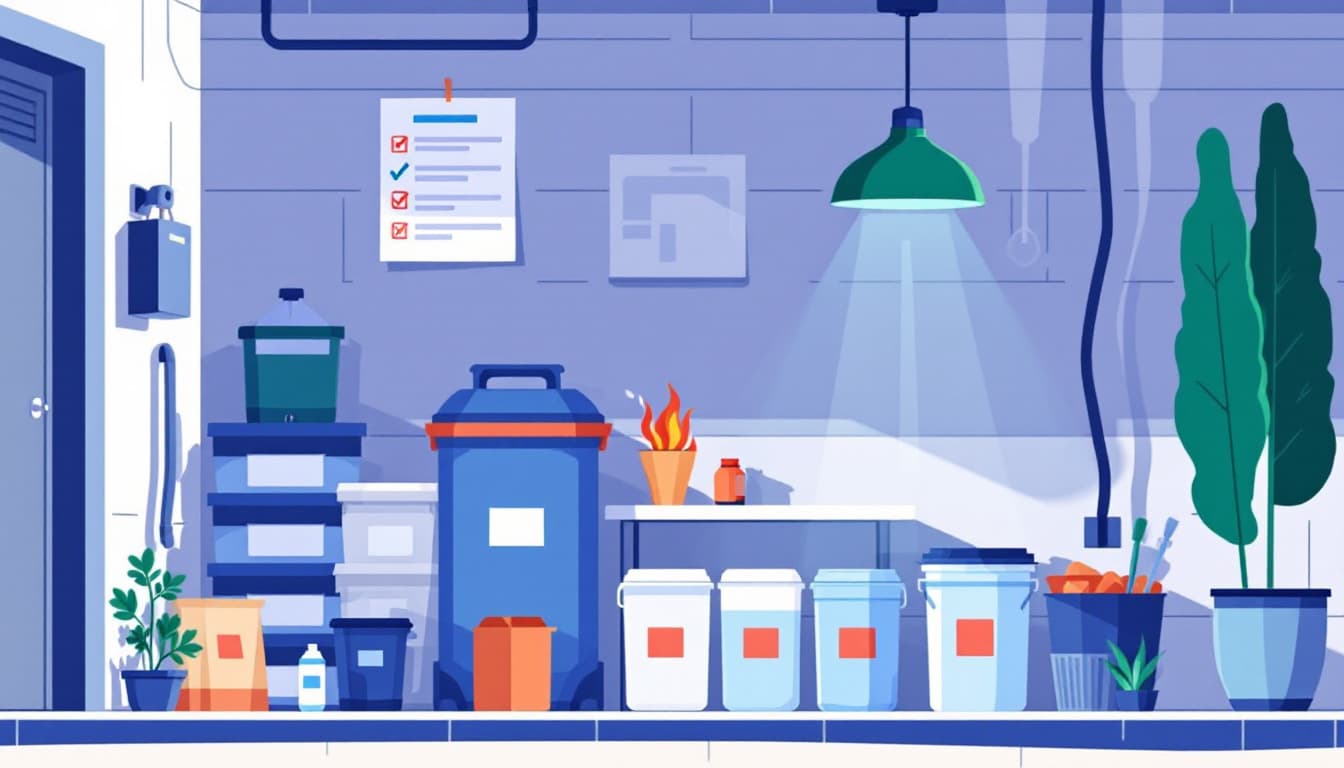
Store two weeks of drinking water before summer peaks. FEMA's baseline recommendation is one gallon per person per day, but in Texas July heat — especially without air conditioning — adults and children need closer to two gallons. For a family of four, a two-week supply at that rate is roughly 112 gallons. That's four to five food-grade 25-gallon stackable containers kept in a garage or utility closet, rotated annually. This isn't about catastrophe; it's about the three-to-five-day window that follows a boil-water notice or a utility interruption, which Texas municipalities issue several times a year under normal conditions.
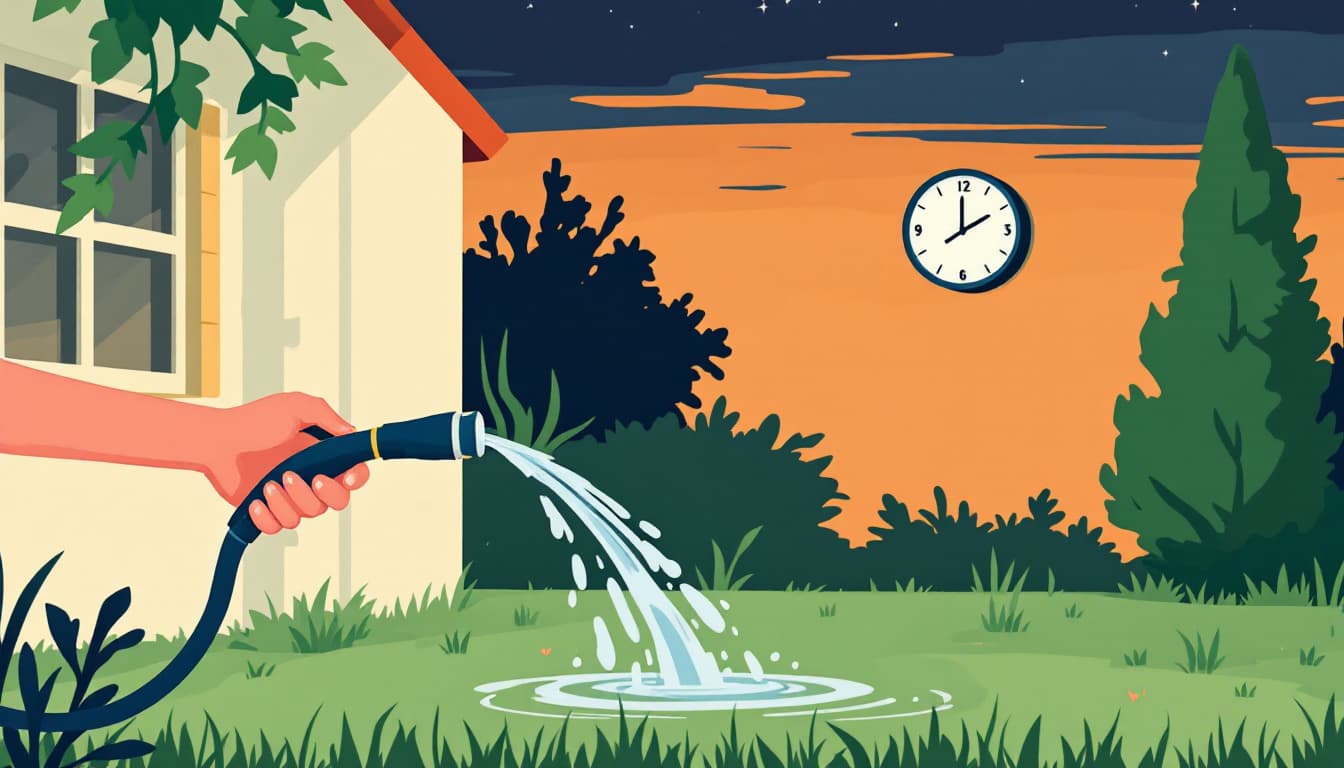
Audit your outdoor water use now, before restrictions force you to. Landscaping accounts for the largest share of residential water consumption in Texas metros — in some suburbs, it runs above 50% of household use during summer. Switching to drip irrigation on a timer and replacing even a partial section of lawn with native groundcovers (buffalo grass, cedar sedge, Texas lantana) reduces consumption enough to stay ahead of Stage 2 restrictions without killing plants. Many Texas municipalities offer a rebate for turf replacement; check your city's water conservation page.
Have a plan for water service interruption longer than 72 hours. If you rely on municipal supply and your reservoir sits below 30%, a pump failure, a pipe break, or a declared emergency can leave you without pressure for days. Know whether your nearest neighbor has a well. Know where your city's designated water distribution points are. A simple gravity-fed filter — the kind that works with any freshwater source — combined with your stored supply covers most realistic scenarios without requiring an off-grid lifestyle.
The bigger picture
A billion-dollar desalination plant is a sign that Texas is taking its water future seriously. It's also a project that will not turn on tomorrow, next year, or probably for many years after that. The families most affected by the gap between now and then are in communities already seeing restrictions, already watching lake levels drop.
Resilience here doesn't require a bunker or a rainwater-collection compound. It requires knowing your numbers, storing a reasonable buffer, and reducing discretionary consumption before you're told to. The infrastructure will catch up. The question is how your household handles the interval.