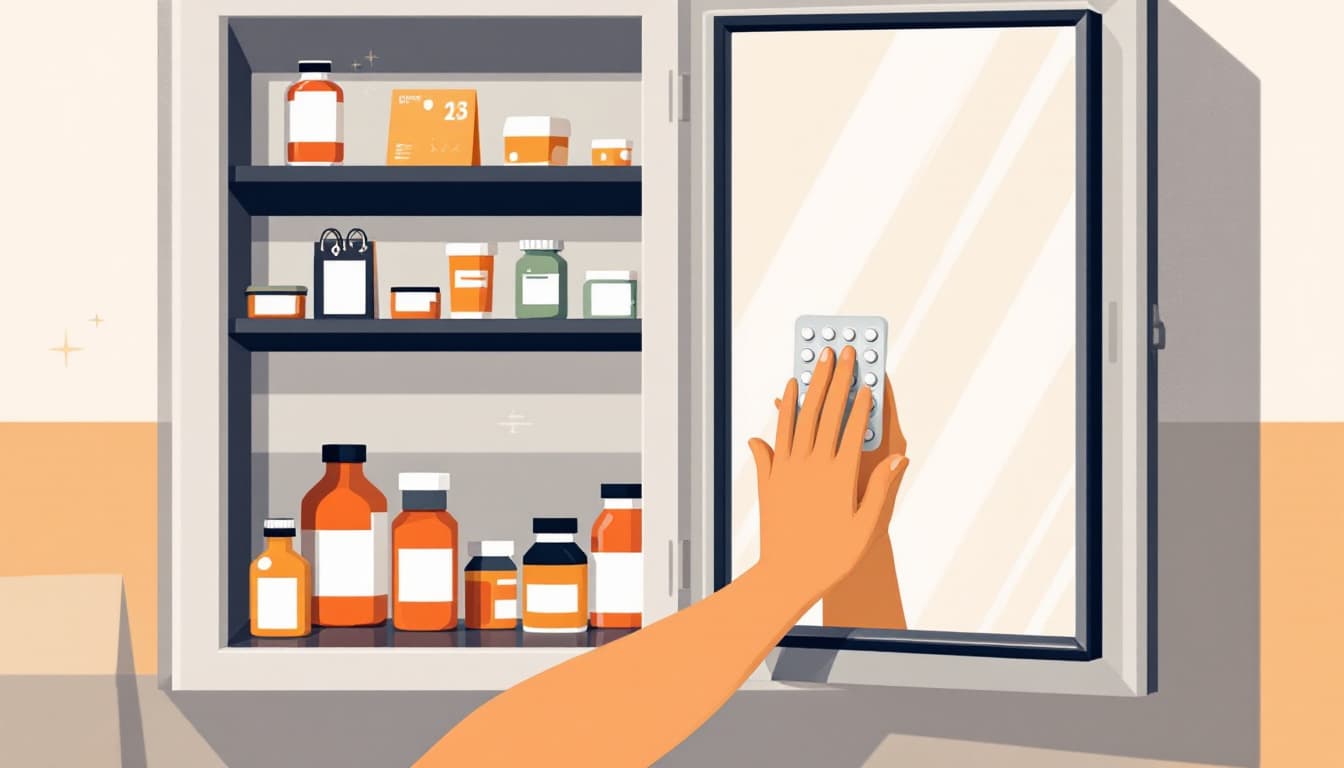
Picture a household that does everything roughly right. They have a two-week supply of food. A go-bag in the hall closet. Three days of water in the garage. And in the medicine cabinet: a small fortress of prescription bottles, OTC backup packs, and emergency antibiotics their doctor wrote "just in case," most of which expire before anyone remembers to check.
That last part is the one that quietly costs them.
Medication management is not a dramatic preparedness failure. Nobody writes about it. It produces no urgent headline. But as a slow-leak risk — a recurring, underweighted drag on household resilience — it's worth sitting with the math.
The shape of the problem
Here is a rough sketch of what a prepared middle-class household typically holds: a 90-day refill of any chronic medications, one or two OTC backup bottles (antihistamines, ibuprofen, maybe a decongestant), a first-aid topical or two, and whatever was prescribed during the last illness and not fully finished. Add an epi-pen if anyone has allergies, and you may have a device that costs several hundred dollars at retail.
Now run the expiration clock. Ninety-day prescriptions are typically filled and refilled on a rolling basis, but backup quantities sit. OTC bottles purchased during a scare get pushed to the back. The epi-pen auto-refill reminder gets ignored once, then ignored again. Studies examining medicine cabinet audits — the kind of research that pharmacies and health systems occasionally publish in their continuing-education materials — consistently find that a meaningful share of household medications are expired, some by more than a year.
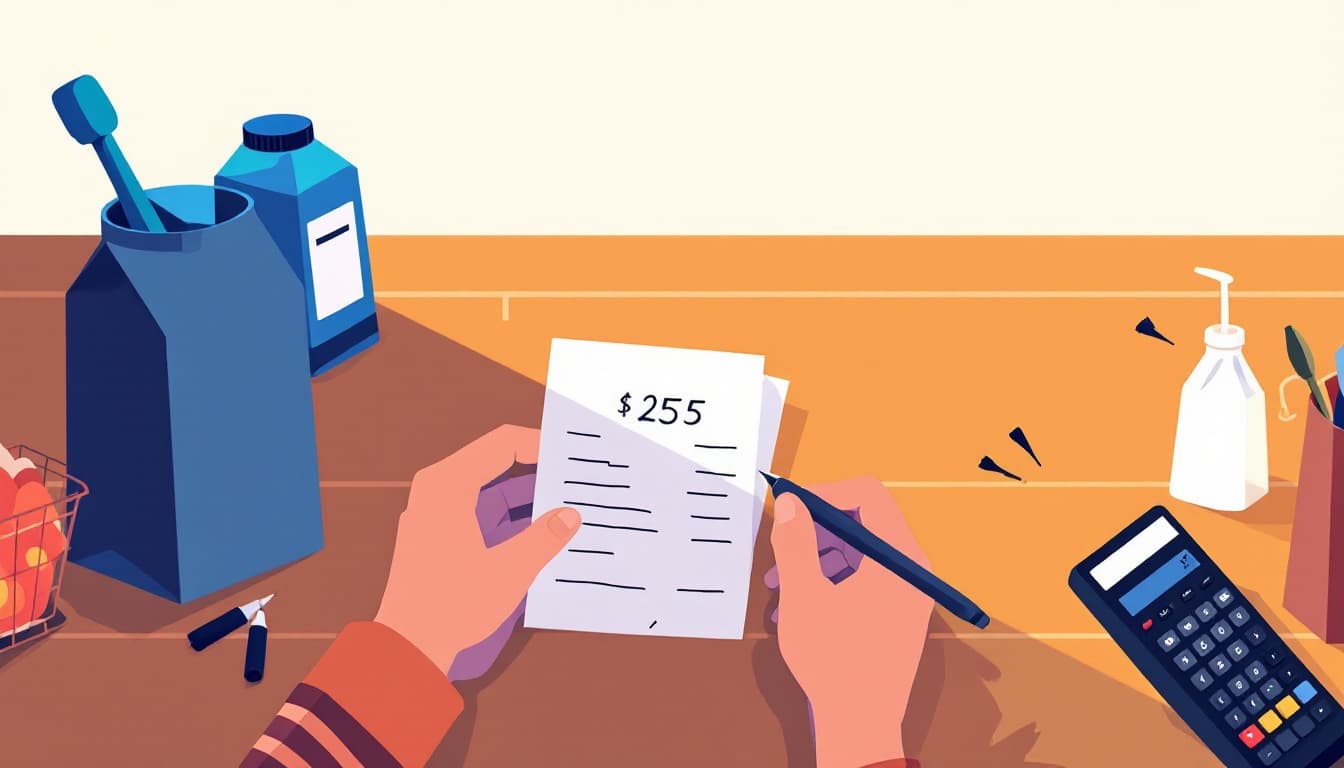
The dollar number is harder to pin down precisely, but a reasonable household estimate is not difficult to construct. A single brand-name 90-count bottle of a common allergy medication runs $18–$35 OTC. An epi-pen two-pack at out-of-pocket cost can exceed $650 without good insurance coverage. A Z-pack antibiotic, if someone convinced a doctor to prescribe a backup supply, runs $25–$80. If a household discards even two or three items a year because they expired unnoticed, the annual leak is $50–$200 — and in a year where the epi-pen lapses, it can spike dramatically higher.
That's not a catastrophic number. But it is money spent purchasing the feeling of preparedness without the actual protection.
Why the orthodox prepper advice doesn't fix this
The standard preparedness guidance on medications is essentially: "rotate your stock." This is correct and useless in the same breath. Rotation systems work for canned goods because you interact with canned goods. You pull from the pantry, you notice what's in back, you use the oldest first.
Medications don't work that way. You don't eat one ibuprofen a week to rotate the backup bottle. You interact with your medicine cabinet episodically — when someone is sick, when you're in a hurry, when a child needs something at 2 a.m. The cabinet is not a pantry. It is a repository you mostly ignore until you need it urgently, at which point you are the least equipped to make calm inventory decisions.
The result is that "rotate your stock" assumes a behavioral pattern that almost no household actually exhibits. The advice is aimed at a fictional household that audits its medicine cabinet with the same regularity it cleans the gutters. Most households do not clean their gutters on schedule either.
A framework that maps to real behavior
The households that actually manage this well tend to do something structurally different: they attach medication checks to events they already do, not to a calendar they aspire to maintain. An annual physical is a natural trigger — you're already thinking about health, you have a provider to ask questions about refills and substitutions. A change of season works for some households. Others tie it to a bill payment or an insurance renewal.
The point isn't which anchor you choose. It's that the anchor has to be inevitable, not aspirational. "Every six months" is aspirational. "The week of your annual physical" is inevitable.
A second structural fix is keeping a visible expiration list — not inside the cabinet, but somewhere you actually see it. A note on the inside of a kitchen cabinet door, a recurring phone reminder three months before a known expiration, anything that moves the signal out of the place you rarely look and into your normal visual environment.
If you want to run the actual math on what your household holds versus what it would cost to replace on short notice, our water and food calculator isn't designed for medications specifically, but the underlying framework — replacement cost times probability of loss — translates directly.
The bigger principle
Prepared households are not immune to slow drains. They are sometimes more vulnerable to them, because the act of building a supply creates a feeling of completion that discourages ongoing attention. You bought the epi-pen. You are the kind of person who buys the epi-pen. That identity is real, but the epi-pen expires in eighteen months whether or not the identity holds.
The risks worth worrying about are rarely the ones that arrive dramatically. They are usually the ones that have been quietly leaking for two years by the time you notice them.