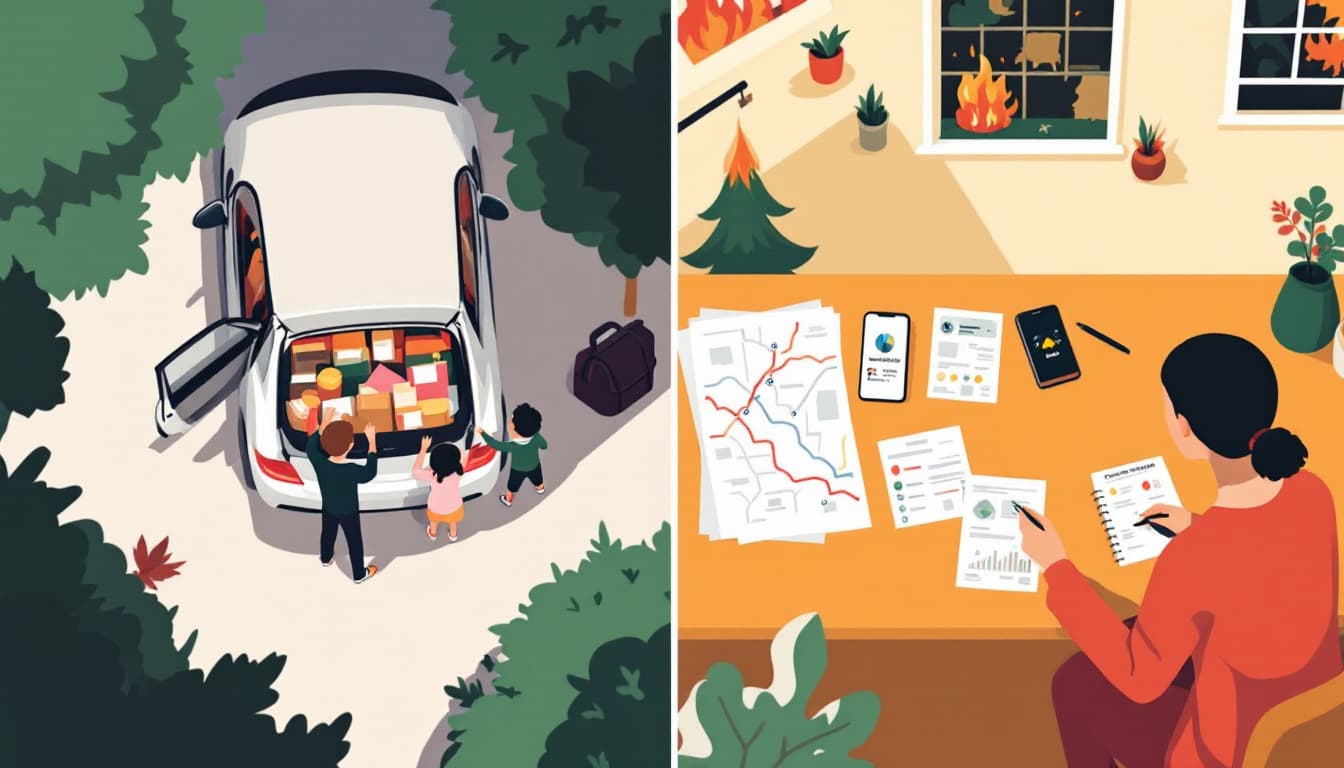
A red flag warning and thunderstorm risk arriving together in August is not a scheduling conflict — it is the ignition sequence for Washington's worst wildfire days. FOX 13 Seattle reported both conditions in play this week, covering areas that have already baked through a dry summer. The threat is not the rain. It is the lightning that precedes it, the gusty outflow winds that follow it, and the grass and timber that received almost none of the moisture.
What's actually happening
Red flag warnings are issued by the National Weather Service when three things converge: low relative humidity, elevated wind speeds, and critically dry vegetation. Thunderstorms in this context are most dangerous in their early stage, when lightning strikes the ground before precipitation reaches it. Those dry lightning strikes start fires across multiple locations simultaneously, which overwhelms local fire response and lets individual fires grow before resources arrive.
Washington's east side — the Okanogan Highlands, the Channeled Scablands, the Columbia Basin foothills — has seen this pattern repeatedly. But western Washington is not exempt: the east slopes of the Cascades from Stevens Pass south to White Pass sit in a dry rain shadow and carry real fire risk every August.
For households, the practical meaning is that evacuation orders, when they come, arrive fast. The Camp Fire in California and the 2020 Labor Day fires in Oregon both demonstrated that communities had hours, not days, once conditions aligned. Washington's own 2015 Okanogan Complex fire burned over 400 square miles in days. Planning after the warning is issued is planning too late.
What we'd actually do
Check your evacuation level right now, not when you smell smoke. Washington uses a three-level system: Level 1 is "be ready," Level 2 is "be set to leave," Level 3 is "leave now." Your county emergency management website and the Washington State Department of Natural Resources fire dashboard both carry current levels. Bookmark them. Know which level applies to your address before Thursday.
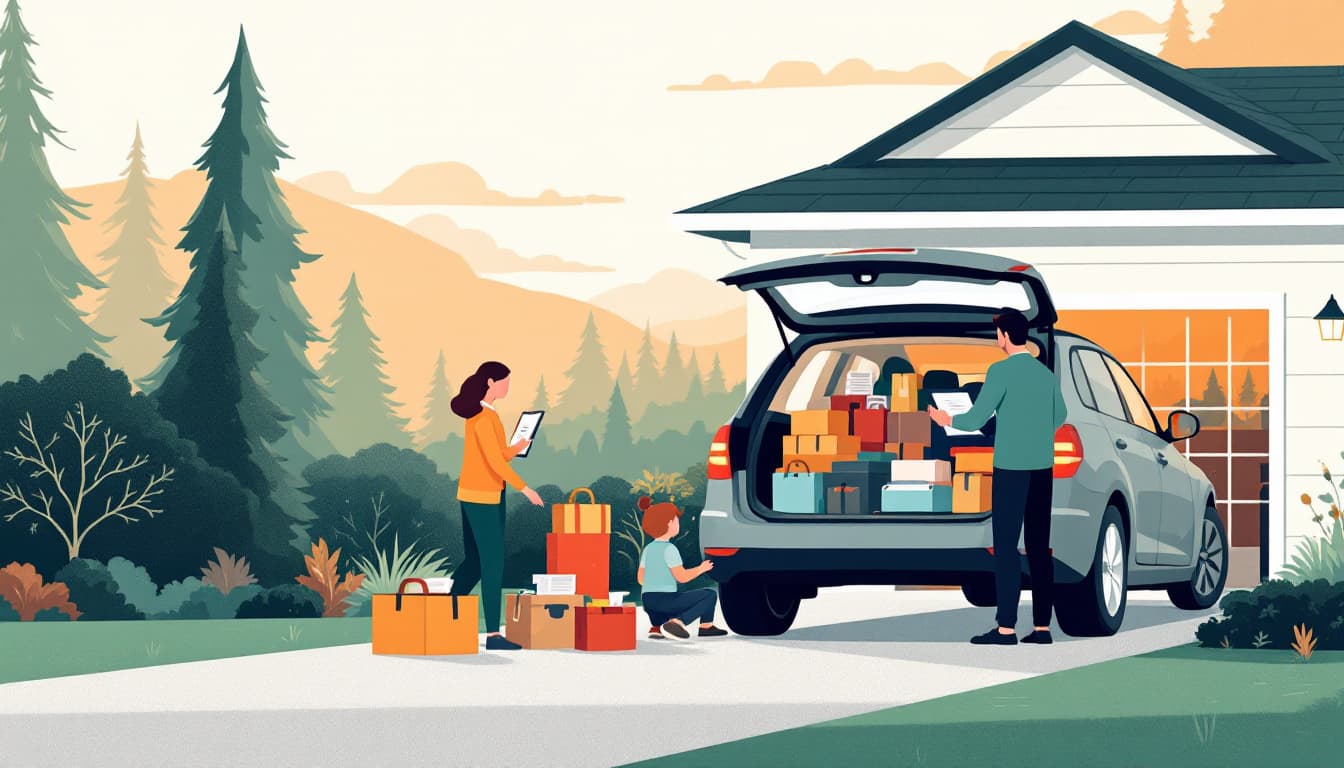
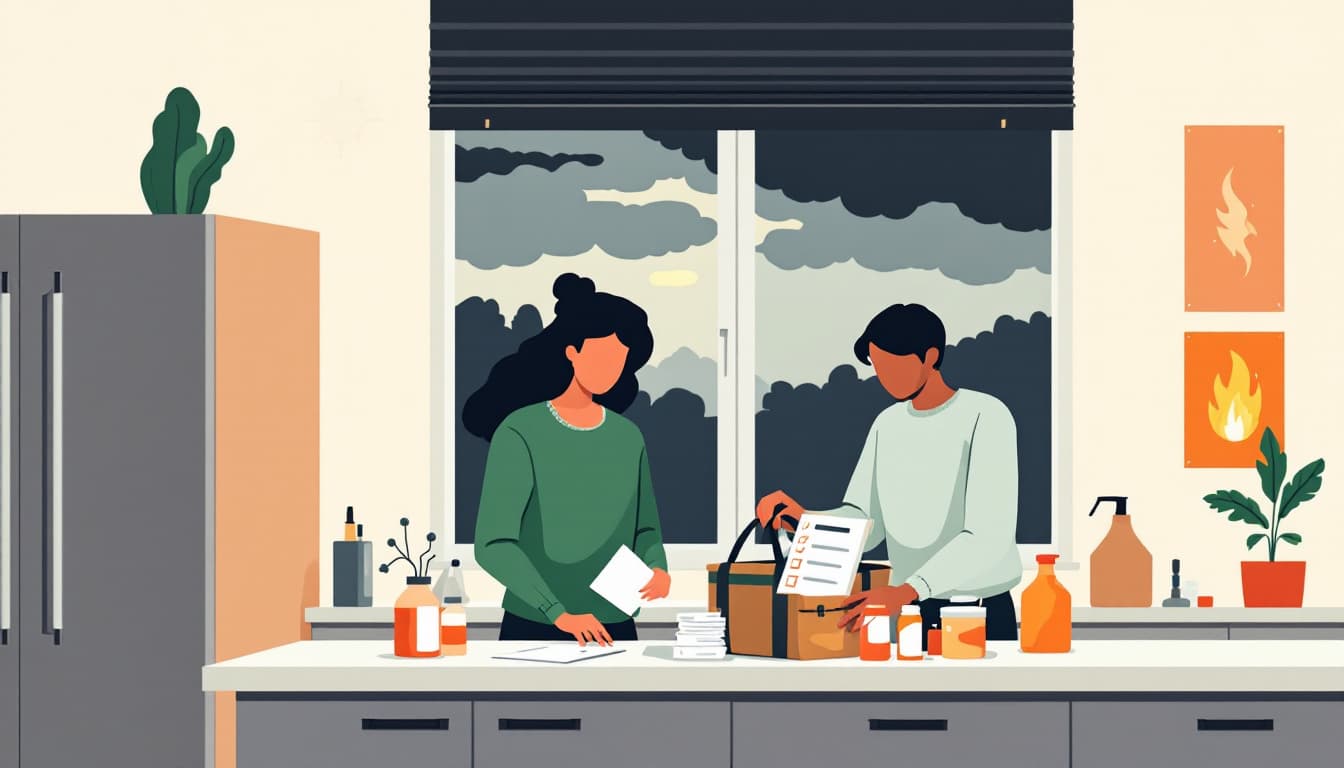
Put your go-bag where you can grab it in two minutes. Not in the attic. Not half-assembled. A functional go-bag for a Washington household includes medications for every person and pet, copies of insurance documents (or a thumb drive), three days of food and water, phone chargers, N95 masks (smoke, not just Covid-era disposables), and cash. If yours needs restocking, spend 30 minutes this evening doing that — not this weekend.
Have a named meeting point and a named out-of-state contact. Smoke and crowded roads during an evacuation will make local calls unreliable. A contact in Idaho or Oregon who both adults in the household can reach independently solves the "where are you" problem without requiring cell towers in your county to stay functional.
Move flammable material away from your home's perimeter today. Defensible space is not a week-long project. Moving woodpiles, dry planters, welcome mats, and wooden furniture away from exterior walls takes under an hour and meaningfully changes how ember wash from a nearby fire behaves around your structure. The Washington State Fire Marshal's guidance recommends 0-5 feet from the house be completely non-combustible.
Sign up for your county's emergency alert system before tonight. Most Washington counties use Everbridge or a similar opt-in platform. WA-Alert covers the state, but county-level systems often issue faster, more granular warnings. Signing up takes three minutes. You will not remember to do this once an evacuation order is active.
The bigger picture
Red flag warnings in August are not a crisis — they are a known seasonal condition in Washington that requires a known household response. The mistake most families make is treating preparation as a one-time project rather than an annual calibration. If your go-bag is current, your alerts are active, and your household has a plan with two rally points and one out-of-state contact, you are not waiting for things to get bad. You are already positioned to move calmly when the Level 3 order comes.
Durability is not about having more gear than your neighbors. It is about removing the decisions you'd have to make under pressure. This week's warning is a free reminder to do that work while you still have time to do it slowly.